
products
Dairy Homogenization Machine | Milk Homogenizer
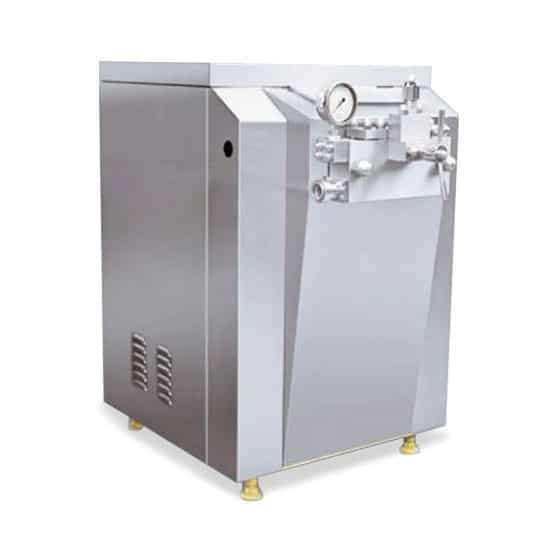
Dairy Homogenization Machine is a high-pressure homogenization equipment that refines macromolecular substances in milk through pressure, making dairy products more uniform in properties, purer in taste, and preventing fat floating.
Overview
Specifications
| Homogenization Effect | Without Homogenization | With Homogenization |
|---|---|
| Fat Distribution | Uneven, rises to surface | Uniformly distributed |
| Texture | Grainy, inconsistent | Smooth, creamy |
| Whey Separation | Visible after 24 hours | Minimal or none |
| Shelf Life | 7-14 days | 14-21 days |
| Fermentation Consistency | Variable batch quality | Consistent results |
Specifications
| Configuration | First Stage | Second Stage | Best For |
|---|---|
| Single-Stage | 15-25 MPa | None | Standard yogurt, fresh milk |
| Two-Stage | 20-25 MPa | 3-5 MPa | Greek yogurt, high-fat products, premium dairy |
Specifications
| Pressure | Average Globule Size | Resulting Texture | Best Application |
|---|---|
| 10 MPa | 1.5-2.0 microns | Light, pourable | Drinking yogurt |
| 15 MPa | 1.0-1.5 microns | Smooth, medium body | Standard yogurt |
| 20 MPa | 0.5-1.0 microns | Thick, creamy | Premium yogurt |
| 25 MPa | < 0.5 microns | Very thick, premium | Greek yogurt, labneh |
Specifications
| Type | Pressure Range | Capacity | Best Application | Price Range |
|---|---|
| High-Pressure Homogenizer | 15-25 MPa | 200-5000L/hr | Commercial yogurt | $8,000-$50,000 |
| Two-Stage Homogenizer | 20-25 + 5 MPa | 500-10000L/hr | Premium dairy, Greek yogurt | $15,000-$80,000 |
| Ultrasonic Homogenizer | Acoustic | Up to 100L/hr | Laboratory, research | $5,000-$20,000 |
| Inline Homogenizer | 10-20 MPa | 1000-20000L/hr | Continuous production | $20,000-$100,000+ |
Specifications
| Feature | Shuliy Homogenizer | Typical Competitor |
|---|---|
| Pressure Range | 15-25 MPa | 10-20 MPa |
| Two-Stage Design | Standard | Often single-stage |
| Plunger Material | Ceramic-coated | Standard steel |
| Valve Material | Tungsten carbide | Stainless steel |
| Temperature Control | Built-in heating | External required |
| Pressure Stability | +/- 0.5 MPa | +/- 1-2 MPa |
| Continuous Operation | 24/7 capability | 8-12 hours |
| Motor Efficiency | IE3 premium efficiency | IE2 standard |
| Noise Level | < 85 dB | 90-95 dB |
| Warranty | 2 years | 1 year |
Specifications
| Parameter | Recommended Value | Effect of Deviation |
|---|---|
| Preheating Temperature | 50-60C | Below 45C: poor homogenization |
| Homogenization Temperature | 55-70C | Above 70C: protein denaturation |
| First Stage Pressure | 20-25 MPa | Lower: incomplete homogenization |
| Second Stage Pressure | 3-5 MPa | Absent: re-coalescence risk |
| Fat-to-Casein Ratio | 0.2g casein/g fat | Affects texture stability |
FAQ
Common buyer questions.
Answers are generated only from source-backed product data.
What is the difference between single-stage and two-stage homogenization?
Single-stage homogenization uses one homogenizing valve at high pressure. Two-stage homogenization adds a second valve at lower pressure (typically 3-5 MPa) after the first stage. The second stage prevents fat globule re-coalescence and is especially important for high-fat dairy products like cream or yogurt, ensuring long-term stability and consistent texture.
Can homogenization replace pasteurization?
No, homogenization and pasteurization serve different purposes. Homogenization is a mechanical process that reduces fat globule size, while pasteurization is a heat treatment that destroys pathogenic bacteria. Both processes are typically used in yogurt production for different purposes.
How do I know if my homogenizer is working properly?
Signs of proper homogenization include: no visible cream layer after 24 hours of storage, smooth texture in finished yogurt, and consistent results batch to batch. Regular testing with a microscope to observe fat globule size (should be less than 1 micron) is the most reliable indicator of homogenization efficiency.
What maintenance is required for the homogenizer?
Daily inspection includes checking oil levels and pressure readings. Weekly maintenance includes inspecting seals and cleaning valves. Monthly service includes replacing worn seals and calibrating sensors. Annual overhaul includes complete inspection of plungers and bearings.
Request current specifications.
Send the model, capacity, voltage and target market for a practical quotation.